My First Journal
· 3 min read
A few months ago, while helping a friend move furniture into his new apartment, we ended up talking about life, struggles, and how to deal with them.
A lot of what he mentioned wasn’t new to me: gratitude journaling, affirmations, that whole world. I’d heard it all before, in videos and podcasts. But there’s a difference between advice from a stranger on a screen and the same words from someone sitting across the room from you.
This was my motivation to start a few of those practices myself and I decided to start with journaling.
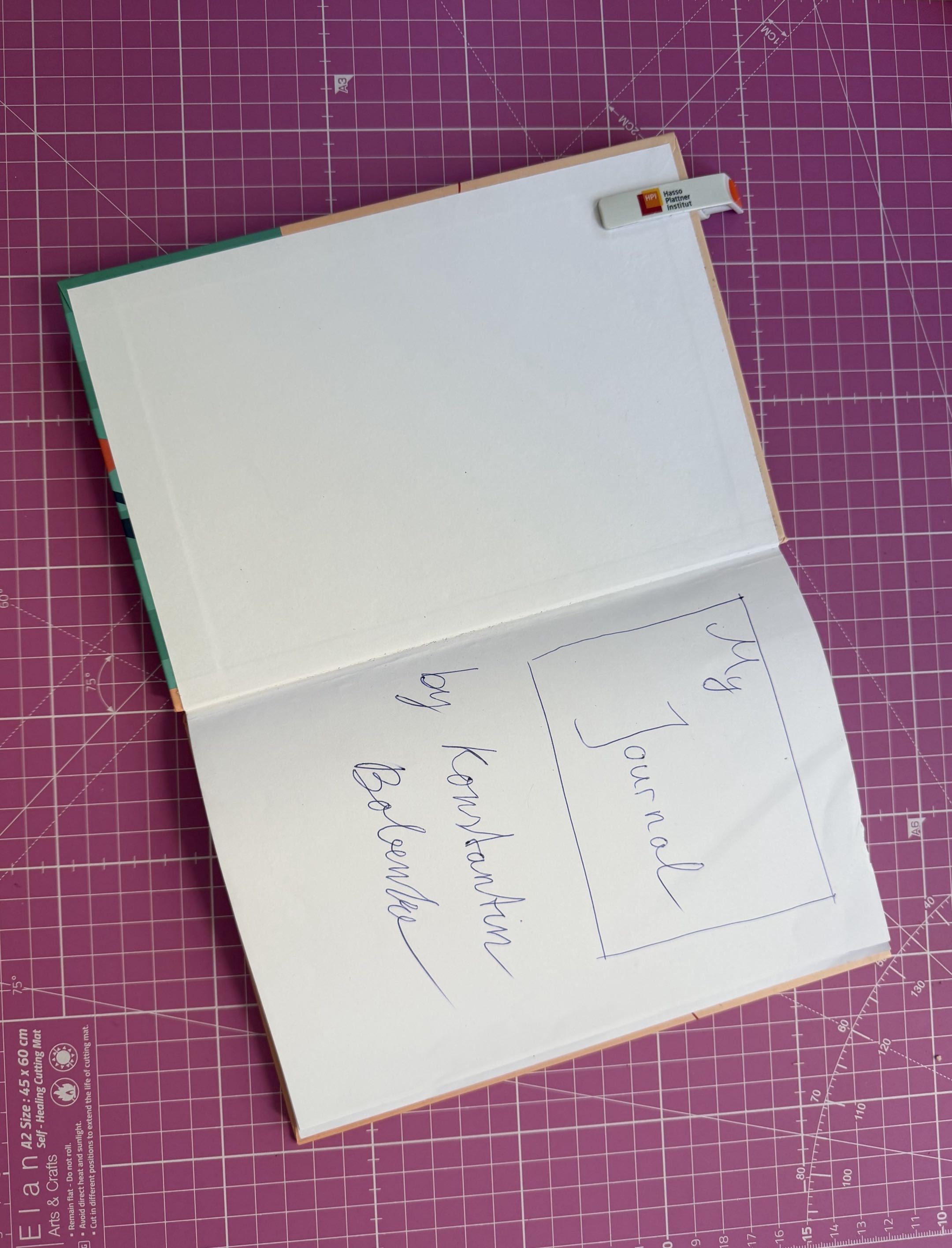
Even though my friend already gave me some advice on how to do it, I started by watching a YouTube video on journaling, where the author gave tips and methods on how and what to write.
To be honest, I think that was already my first mistake. You don’t really need a method to know what to write. It just comes by naturally.
First entries #
Revisiting what I wrote, my first tries were a mess. The things I wrote about were very superficial and I noticed how hard it is to share your true thoughts and go deeper than the surface. Even if you are by yourself it is sometimes hard to get to the thoughts that are really bothering you, since we are so used to hiding them from the world and therefore also from ourselves.
This is a barrier that I still haven’t fully overcome, and especially can’t overcome when I write in a busy public space such as the S-Bahn or at a café on a busy road. There is so much happening around you and by default I often came back to this pattern of writing about superficial things.
What worked way better was writing in a calm environment, like at home before going to sleep or by a calm sea.
What did it help me with #
The most important thing journaling gave me was a better sense for mindfulness. Reflecting without writing often felt like a loop, since the same thoughts always circle back and you often don’t even notice it. Writing breaks the loop, since you can’t put the same half-formed thought on the page and will notice when reading it back.
It also taught me to structure my thinking. A worry in your head is a fog; the same worry in a sentence has edges, a beginning and an end, something you can actually look at.
Additionally, it made me better with words. I’ve never been especially good with language, but writing a little every day, alongside reading books slightly outside my comfort zone, with vocabulary I don’t quite own yet. This made my writing improve more than expected.
The last thing journaling helped me with was being more thankful. Moments I didn’t really appreciate before — a quiet evening, a small kindness to a stranger became something I started to appreciate way more than before.
Advice for people who want to start Journaling #
Experts often give the worst advice. A brilliant professor can be a terrible teacher, because they can’t relate to your struggles. I’m no expert either; I only started a few months ago. But maybe that’s exactly why this might help. Here’s my unsolicited advice:
- Don’t look for a method. You don’t need one. Just open the notebook and write.
- Write somewhere calm. At home before sleep works. A busy café or the S-Bahn doesn’t.
- Don’t judge the first tries. You will progress faster than you think, just be honest.